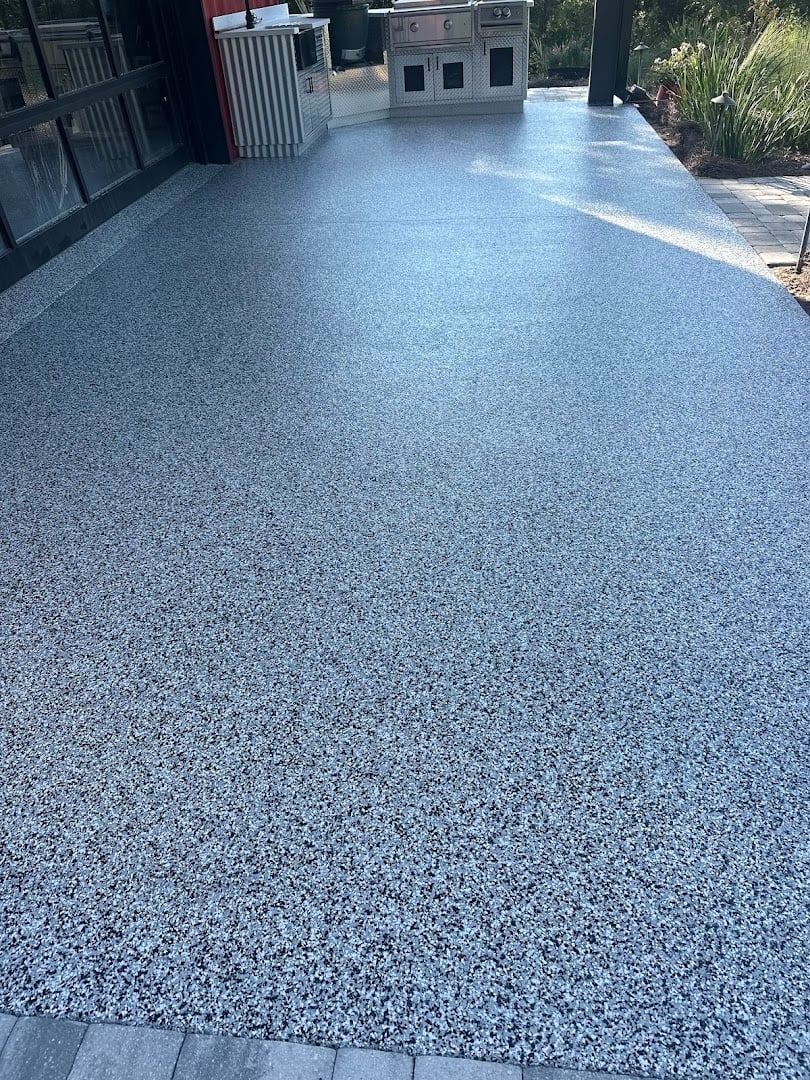
Quick answer: Tallahassee's humid climate and heavy seasonal rainfall put basement concrete at constant risk of moisture intrusion, cracking, and surface deterioration. Basement floor coatings Tallahassee FL homeowners trust—like epoxy and polyaspartic systems—seal concrete pores, block moisture vapor, and add durable protection that extends the life of your foundation while keeping your basement dry and usable.
Key Takeaways
- Florida's humidity and rainfall make basements especially vulnerable to moisture damage, efflorescence, and concrete breakdown over time.
- A properly installed basement concrete coating creates a vapor barrier that protects against cracking, staining, and mold growth.
- Deese Elite offers professional coating installation designed specifically for Tallahassee's climate and soil conditions.
Basements don't get much attention until something goes wrong. A musty smell, a chalky white residue on the floor, or a hairline crack that seems to grow every few months—these are the warning signs that moisture has already found its way into your concrete. In Tallahassee, where humidity hovers high for much of the year and summer storms roll through regularly, basement concrete faces an uphill battle against water intrusion.
The good news? You don't have to wait for damage to show up before taking action. A quality basement floor coating can protect your concrete from the inside out, stopping moisture before it becomes a structural or health issue. This guide breaks down why Tallahassee basements are so susceptible to moisture damage, how floor coatings work to prevent it, and what to look for when choosing a coating system for your home.
Why Is Tallahassee's Climate So Hard on Basement Concrete?
Tallahassee sits in a humid subtropical zone, which means basements here deal with more than the occasional rainstorm. Average annual rainfall in the region exceeds 60 inches, and relative humidity frequently stays above 70% for much of the year. That combination creates near-constant pressure on below-grade concrete.
Concrete is porous by nature. Without a protective barrier, it absorbs ambient moisture and groundwater like a sponge. Over time, this leads to a cycle of expansion and contraction that weakens the slab from within. Add Florida's clay-heavy soil, which retains water and swells after heavy rain, and you've got a recipe for hydrostatic pressure pushing against your foundation walls and floor.
What Happens When Moisture Gets Into Untreated Concrete?
Left untreated, moisture-exposed concrete typically shows a predictable progression of damage:
- Efflorescence: A white, powdery mineral deposit that forms as water evaporates from the surface, leaving salts behind.
- Spalling and flaking: The top layer of concrete begins to chip or peel away as moisture freezes, expands, or reacts with surface minerals.
- Mold and mildew growth: Persistent dampness creates ideal conditions for mold, which can spread to stored items, framing, and HVAC systems.
- Cracking: Repeated moisture cycles weaken the concrete's structural integrity, leading to cracks that allow even more water infiltration.
Each of these issues tends to compound the others. A small crack lets in more water, which accelerates efflorescence, which further weakens the surface. Catching the problem early—or preventing it altogether—is far less costly than repairing an already-damaged slab.
How Do Basement Floor Coatings Prevent Moisture Damage?
A basement concrete coating works by sealing the surface of the slab, closing off the microscopic pores that would otherwise let moisture pass through. Choose a coating system if your basement experiences regular humidity, occasional dampness, or visible efflorescence, since these are the earliest signs that untreated concrete is already absorbing water.
What Types of Coatings Work Best for Moisture Protection?
Not all coatings offer the same level of moisture resistance. The most effective options for Tallahassee homes include:
- Epoxy coatings: A durable, chemical-resistant layer that bonds tightly to concrete and creates a near-impermeable seal. Epoxy performs well in basements with moderate moisture exposure and heavy foot traffic.
- Polyaspartic coatings: These cure faster than epoxy and offer excellent flexibility, which helps the coating resist cracking as the slab shifts slightly with temperature and moisture changes. Polyaspartic systems are often recommended for Florida basements because of their UV stability and quick turnaround.
- Polyurea coatings: Known for superior flexibility and resistance to hydrostatic pressure, polyurea is a strong choice for basements prone to water intrusion from the surrounding soil.
Choose epoxy if cost-effectiveness and chemical resistance matter most, but opt for polyaspartic or polyurea if your basement faces higher moisture pressure or if you need a faster installation timeline.
How Does Proper Surface Preparation Affect Coating Performance?
Coating performance depends heavily on what happens before the coating is ever applied. Concrete must be properly cleaned, profiled, and dried to ensure the coating bonds correctly. Skipping this step—or applying a coating over a slab with existing moisture trapped beneath the surface—can trap vapor and cause the coating to bubble or delaminate within months.
Professional installers typically test moisture levels in the slab before beginning work. This step confirms the concrete is dry enough for coating application and identifies whether additional vapor barriers or drainage solutions are needed first.
What Are the Long-Term Benefits of Coating Your Basement Floor?
Beyond moisture protection, a well-installed basement coating offers several advantages that make it a worthwhile investment for Tallahassee homeowners:
- Extended concrete lifespan: Sealing the slab prevents the freeze-thaw-style cycling that weakens concrete over time, even in Florida's milder winters.
- Improved air quality: Blocking moisture reduces the conditions that allow mold and mildew to thrive, which benefits anyone spending time in the basement.
- Increased usable space: A dry, protected basement floor opens the door to using the space for storage, a home gym, or additional living area without worrying about dampness.
- Easier maintenance: Coated concrete resists stains, is simple to clean, and doesn't require the ongoing upkeep that bare concrete does.
- Added home value: A documented, professionally coated basement signals to future buyers that moisture issues have been proactively addressed.
Protect Your Tallahassee Basement Before Moisture Becomes a Problem
Basement concrete in Tallahassee faces a tougher environment than most homeowners realize. Between heavy rainfall, high humidity, and clay-rich soil, the conditions are practically engineered to wear down untreated concrete over time. A quality coating system addresses the root cause of that damage by sealing the slab and creating a lasting barrier against moisture.
If you've noticed early warning signs—chalky residue, a musty smell, or small cracks—it's worth getting your basement evaluated before those issues grow into costly repairs. Deese Elite specializes in basement floor coatings Tallahassee FL homeowners rely on, with installation methods tailored to the region's climate and soil conditions. Reach out to schedule an assessment and find the right coating solution for your basement.
Frequently Asked Questions
How much does a basement floor coating cost in Tallahassee?
Costs vary based on basement size, the type of coating selected, and the condition of the existing concrete. Epoxy systems tend to be more budget-friendly, while polyaspartic and polyurea options cost more upfront but often require less maintenance over time.
How long does it take to install a basement concrete coating?
Most residential basement coating projects take one to three days, depending on the coating type and square footage. Polyaspartic coatings cure faster than traditional epoxy, which can shorten the overall installation timeline.
Will a floor coating stop existing moisture problems, or only prevent future damage?
A coating primarily prevents future moisture intrusion by sealing the concrete surface. If your basement already has an active water infiltration issue, such as a crack or drainage problem, that underlying issue should be addressed before or alongside the coating installation.
Is a basement floor coating necessary if my basement rarely floods?
Yes. Even basements that don't experience visible flooding are exposed to ambient humidity and vapor moisture that gradually damages untreated concrete. Coatings protect against this slower, less obvious form of moisture damage.
What's the difference between a basement coating and a basement sealant?
Sealants are typically thinner, lower-cost products that offer basic moisture resistance but wear down faster. Coatings like epoxy and polyaspartic provide a thicker, more durable layer with better long-term moisture protection and surface resilience.